
As Autonomous Aircraft move from Demonstration programs to operational deployment, navigation systems are no longer measured solely by accuracy
They must also provide integrity, continuity, and availability, particularly in environments where GNSS signals may be degraded, jammed, or spoofed and where safety of life is a critical concern.
While accuracy is widely understood, integrity defines the maximum navigation error that can exist while maintaining confidence in the system. Continuity ensures that navigation services remain available without interruption, while availability means those services are there when needed. Together, these characteristics form the foundation of assured navigation performance.

For crewed aircraft, pilots can often recognise and respond to navigation anomalies. Autonomous and increasingly automated platforms, however, depend on navigation systems functioning reliably throughout every phase of flight. As a result, assured navigation is becoming a fundamental requirement for the next generation of aviation systems.
This requirement spans a wide range of applications, from commercial and military aircraft to advanced air mobility platforms and uncrewed systems operating in increasingly complex environments. In each case, navigation performance must remain dependable even when satellite signals are challenged by interference or disruption.
The growing prevalence of GNSS interference is reshaping navigation system requirements. While jamming disrupts signal reception, spoofing presents a more complex challenge by transmitting misleading positioning information that may appear valid to a receiver. As aviation systems become increasingly automated, the ability to detect, mitigate, and recover from these threats is becoming an important design consideration.
To address these evolving requirements, manufacturers are placing greater emphasis on navigation resilience, certification readiness, and integration flexibility. CMC Electronics has developed its GNSS product portfolio around these principles, supporting a broad range of operational requirements from precision approach capability through SBAS to compatibility with GBAS architectures.
A common and scalable architecture is increasingly important for platform developers seeking to reduce integration complexity while maintaining compliance with demanding certification requirements. This approach also helps support long-term fleet commonality, maintenance efficiency, and lifecycle support.
Operational experience remains a critical factor in navigation system development. Over the past two decades, more than 30,000 CMC GNSS units have been delivered across a range of aviation platforms, with many remaining in continuous operational service. These systems support applications where navigation performance is essential throughout all phases of flight.
Reported mean time between failures (MTBF) exceeds 200,000 operating hours in rotorcraft applications and 550,000 operating hours in fixed-wing operations. The product family has also maintained a record of zero Airworthiness Directives, reflecting a long history of operational reliability.
A New Generation Built for Emerging Requirements
As navigation requirements continue to evolve, so too must the underlying technology.
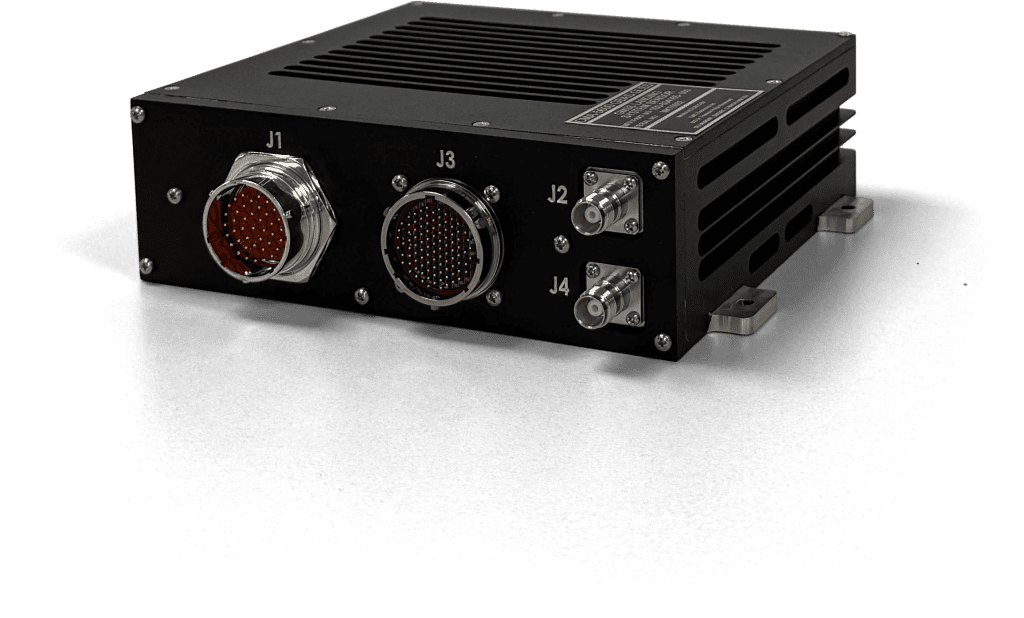
CMC Electronics recently reached an important milestone in the development of its next-generation GNSS platform. Following more than two years of engineering and development, the first prototype units have been assembled and are currently undergoing testing. Initial evaluations have successfully validated core system performance, and the systems are now progressing towards the next phases of customer evaluation and qualification.
The development reflects broader industry trends towards greater resilience, improved integration, and support for increasingly autonomous operations.
Designed for Certification and Integration
At the centre of this next-generation platform is the CMA-5500 / CMA-5600 GNSS receiver architecture.
Designed with dual-frequency, multi-constellation (DFMC) capability, the platform is aligned with commercial certification standards including DAL-A, DO-254, and DO-178C. These requirements continue to play a critical safety-of-life role as aircraft manufacturers seek navigation solutions suitable for both traditional and emerging aerospace applications.
Integration with inertial reference systems is also becoming increasingly important, enabling enhanced navigation continuity when GNSS signals are degraded or unavailable. For many next-generation aircraft concepts, the combination of satellite navigation and inertial sensing provides an additional layer of operational robustness.
The architecture incorporates internal capabilities intended to improve resilience and recovery in the presence of GNSS interference, including jamming and spoofing. While no satellite navigation solution is entirely immune to these threats, continued advances in system design are helping improve performance in challenging operational environments.
Looking Ahead
The aviation industry’s reliance on assured positioning, navigation, and timing will continue to grow as aircraft become more connected, more automated, and increasingly autonomous.
Meeting these demands requires more than accuracy alone. It requires navigation systems capable of delivering integrity, continuity, availability, and resilience under real-world operating conditions.
As these requirements evolve, companies such as CMC Electronics continue to invest in safety-of-life certified navigation technologies designed to support both current aviation platforms and the next generation of autonomous and advanced air mobility systems.
Learn more at: GNSS Receivers